The story
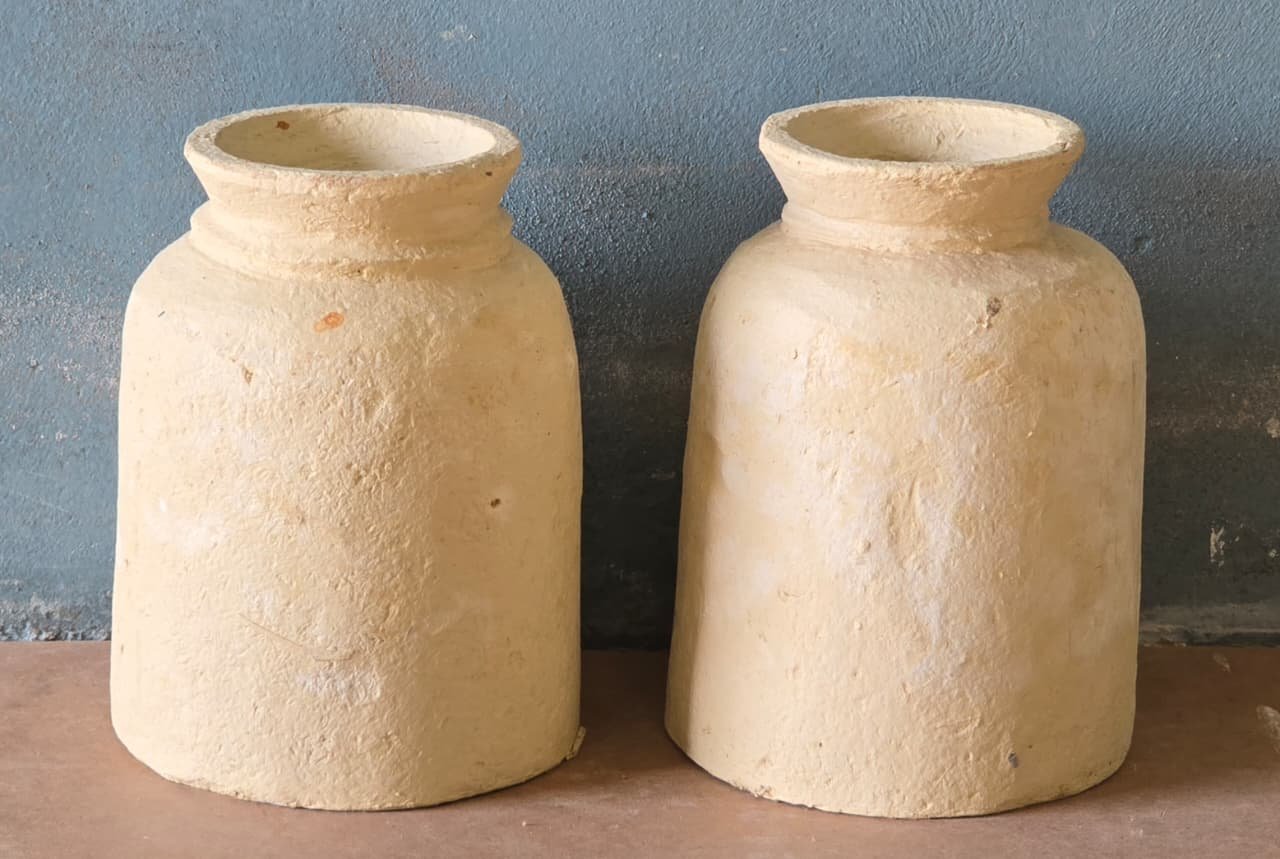
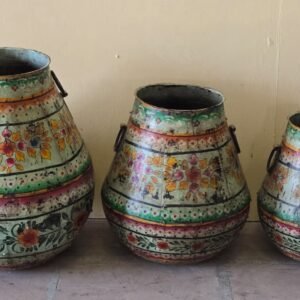
Papier-mâché craft — known in Rajasthan as kagaz ka kaam, the work of paper — arrived in India through the Kashmir tradition, where it reached its most refined expression in the lacquered boxes, bowls, and decorative objects that have been produced in the Kashmir Valley for centuries. The Rajasthani variant of the tradition is bolder and more exuberant, combining the paper-forming technique with the high-contrast palette and confident brushwork of the local folk painting tradition. The papier-mâché form is built up in layers over a mould, each layer allowed to dry before the next is added. The resulting wall is surprisingly strong despite its lightness — the paper fibres interlocking in a structure that can support considerable weight and is resistant to cracking under normal handling conditions. The surface is then sized, primed, and painted, the whole process taking several days of patient work. The painting applied to this vessel draws on the botanical and geometric vocabulary of Rajasthani folk art — the same visual language that appears on the painted furniture of the region, the fabric prints of the block-printers, and the floor paintings that women make at festival time. The motifs are familiar and meaningful: flowers that represent abundance, birds that represent freedom and joy, geometric patterns that represent the ordering of the natural world into human-understandable form. The palette of Rajasthani folk art is characteristically bold — saturated colours, high contrast, the principle that more is usually more when it comes to decorative richness. The papier-mâché vessel becomes, in this tradition, a showcase for the full range of the palette: deep indigo backgrounds, warm gold botanical forms, touches of crimson and emerald that provide the accents without which the composition would be incomplete. Folklorei presents this papier-mâché vessel as part of its documentation of the craft traditions of the Jodhpur region. The technique is at once ancient and continuously evolving — new motifs and colour combinations emerging as craftspeople respond to contemporary taste while maintaining the fundamental vocabulary of the tradition.
Reviews
There are no reviews yet.